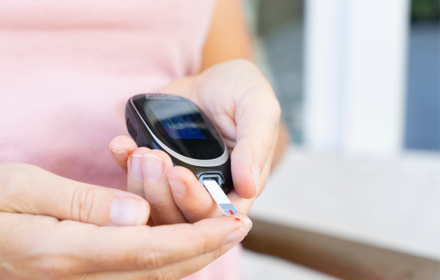
Talking to people with diabetes and autism to understand their specialist care needs
DRWF and Autek CIC publish findings of a new report into the connected conditions to coincide with World Autism Awareness Day.
This World Autism Awareness Day (2nd April) DRWF in collaboration with Autek CIC are pleased to present the findings of our report following a consultation into the challenges faced by autistic people managing diabetes, including type 1, type 2 and gestational.
The consultation was carried out with people living with diabetes and autism through a series of workshops and interviews to explore the individual challenges faced by people living with these conditions. There are few recommended treatment pathways offered to people with diabetes and autism due to lack of previous research in this area.
The consultation follows DRWF and Autek CIC recent announcement of a new collaboration focused on improving diabetes outcomes for autistic people.
Improving diabetes outcomes for people living with autism
Through this work, DRWF and Autek CIC aim to provide relevant and appropriate information to help diabetes management and improve diabetes outcomes for people living with autism.
DRWF and Autek have partnered with the aim of understanding more about the intersection of autism and diabetes, both from a perspective of specific challenges faced by this group of people, and from the perspective of what works? For example, once autistic people form a new routine around diet and exercise for diabetes, this becomes a lifelong change.
The aim of the collaboration, alongside other partner organisations, is to create a suite of educational videos that improve understanding of autism and diabetes, that can be used both with professionals who support autistic people living with diabetes, and autistic people themselves.
Read the full report from DRWF and Autek CIC here

Steve Bond of Autek CIC said: “The findings of the report revealed that this is a topic that has not previously attracted a lot of attention.
“That is not to say that healthcare professionals (HCPs) do not adapt their approaches when supporting an autistic person, more that there is no formal approach to doing so.
“We learned that there are many facets of being autistic (or neurodivergent in a wider sense) that interact with diabetes management. These include the more obvious ones around eating habits, food sensitivities, needle phobias, and social interaction, making support groups and some appointments inaccessible.”
The report said: “We discovered some lesser-known traits such as interoception, where body signals around hunger/thirst or blood glucose levels are not understood, Rejection Sensitive Dysphoria (RSD) which leads to huge levels of guilt, and Pathological Demand Avoidance (PSD) which requires mediative approaches from HCPs otherwise information is not considered.”
The report added: “We learned that in order to understand the interaction of autism and diabetes, we need to consider both characteristics of autism itself, and aspects that derive from the life experiences of autistic people living in a non-autistic world.
“This paper provides a rich narrative and pulls together insights from 30 autistic people who are managing diabetes in different types, including prediabetes. These people cover a wide diversity including gender, gender diversity, age and ethnicity and cover a wide spread of co-occurring conditions which shape the experience of managing diabetes.”

Raising energy levels
Going forward following the findings of the report, Autek CIC suggested three objectives as the next steps in this project:
- Continuing to raise energy levels around this topic for NHS, Public Health, and Voluntary, Community, and Social Enterprises (VCSE). We don’t want this to go away.
- Create communication resources to help autistic people managing diabetes of all types. It is our belief that a suite of videos is the best way to do this, and to create communications that are autistic friendly and provide very clear information from which autistic people, supported by HCPs, can manage their diabetes.
- Set up a research project that takes forward the analysis presented in this paper and develops new approaches to managing diabetes for autistic people. During the consultation, we learnt that everybody’s diabetes is different, and all autistic people are different. This leads us to believe that a person-centred approach is necessary and that the research can help to create a framework whereby these differences can be understood and a plan made for the person. It is our belief that such research can only happen through a research partnership between people with lived experience and those supporting them.
The report concluded: “The collaboration between DRWF and Autek CIC highlights the vital need for tailored and inclusive support for autistic and neurodivergent individuals living with diabetes.
“By placing the lived experiences of autistic people at the centre of the project, there is a concerted effort to develop accessible resources and prioritise co-production. This approach directly addresses both the practical and emotional challenges that this community faces in managing diabetes.
“Looking ahead, it remains essential to pursue further research, advocacy, and sustainable funding. These steps will ensure that autistic voices continue to guide innovation and improvement in diabetes care.
“By fostering greater understanding, empowering individuals to manage their health, and championing inclusion, this initiative lays the groundwork for lasting and meaningful improvements in the health and well-being of neurodivergent people living with diabetes.”
A statement from Autek CIC said: “We are incredibly grateful to each and every one of the participants and the HCPs and voluntary sector organisations who make this consultation possible.
“And to DRWF for funding this consultation, and to our other partner organisations Solent Diabetes Association and Rotary International.”
A statement from the Association of British Clinical Diabetologists (ABCD), on the report said: “The committee welcome this report and its findings, and we look forward to using the resources they produce and the findings of their research.”
Dr Naresh Kanumilli, Chair of the Primary Care Diabetes and Obesity Society (PCDO), said: “This is excellent.”
Comments from Diabetes Specialist Nurses said: “This report has been a long time coming and has given a voice for expert patients who generally feel silenced and unable to articulate their diabetes experience. Feedback from the focus group is so powerful and reminds us all how clinical care should be, holistic and collaborative when planning care rather than focusing just on clinical targets. This report will educate all healthcare professional when supporting a person with autism and diabetes, not only revise patient centred care but encourage realistic goal setting, support problem solving skills and prevent a sense of failure in long term condition management."
Another Diabetes Specialist Nurse commented: “This is very near to my heart as my brother has type 1 diabetes and autism and I can heavily relate to the patient’s feedback, especially around eating habits and struggling to engage with large groups or new clinicians.”
Unique challenges
A statement from DRWF and Autek CIC on the collaboration said: “Diabetes throws up some unique challenges for autistic people, ranging from food intolerances, skin sensitivity and needle phobia, monotropism leading to rigid routines, poor interoception whereby body signals around hunger and low blood glucose levels are missed, specific communication preferences, and aversion to social situations. And every autistic person is unique in the way that these affect them.
“The prevalence relationship between neurodivergence and diabetes is complex with larger studies tending to support an increased risk of diabetes for autistic people. For type 1 diabetes this may relate to autistic people being more prone to autoimmune diseases generally, and for type 2 diabetes it seems to relate to hereditary factors and food intolerances and dietary routines.
“There is not a lot of information focusing on managing diabetes for autistic people, with more available for type 1 than type 2 diabetes. Informally, discussions that Autek CIC social researchers have with autistic people reveal that there are many challenges, sometimes life threatening, around adapting to life with diabetes for autistic people, and a paucity of information designed to help this group of people and their specific needs.
“We want to create some energy around this topic and to raise awareness of the additional challenges autistic people face with diabetes.”
DRWF is a UK registered charity that aims to provide information and support to promote good self-management and to enhance quality of life for people living with all types of diabetes.
Autek CIC is a lived-experience social enterprise that aims to support disabled and autistic people live their lives on their own terms, through the creation of videos, and are personally aware of the challenges that autistic people face following the onset of diabetes.
Steve Bond of Autek CIC said: “It has been fantastic working with DRWF to push forward my personal crusade to get better support for autistic people struggling to live with diabetes.
“We have made progress in terms of understanding the challenges through engaging with autistic people and raising awareness through DRWF’s network of connections.
“We are looking forward to the next phase of our partnership which is to create videos that help explain different facets of diabetes in autistic accessible ways, and to embark on a participative research project to develop improved pathways for autistic people diagnosed with, or at risk of, diabetes.”
World Autism Awareness Day
The United Nations General Assembly designated 2nd April as World Autism Awareness Day (WAAD) in 2007, and the United Nations has since worked to promote the full realization of human rights and fundamental freedoms for people living with autism, ensuring their equal participation in society.
A statement from the United Nations said: “Over the years, significant progress has been made, driven in large part by autistic advocates who have worked tirelessly to bring the lived experiences of autistic individuals to the forefront of global discussions.
“The 2026 observance of World Autism Awareness Day, held under the theme ‘Autism and Humanity – Every Life Has Value,’ highlights and affirms the dignity and worth of all autistic people as part of our shared human future. At a time when misinformation and regressive rhetoric about the lives of autistic people is resurfacing, this year’s virtual event is a call to action to move beyond limiting narratives and to recognise the inherent dignity, equal rights, and unconditional worth of every autistic person.”
Read the full report from DRWF and Autek CIC here
Read more about living with diabetes in the series of DRWF diabetes information resources
Could your story help another?
Do you have a story about experience of living with diabetes and autism you would like to share with readers?
If so, we would love to hear from you!
Please contact the Editor by email
Submissions should be around 500-600 words long for consideration of publication in a future edition of Diabetes Wellness News.
I would like to make a regular donation of
I would like to make a single donation of
There are lots of ways to raise money to support
people living with all forms of diabetes.
Bake, Swim, Cycle, Fly ... Do It For DRWF!
Fundraise with us
Recent News